“Have fun, show up, take the pressure off, and rewrite your story whenever you need to.”
Courtney Coppinger talks about rebuilding her relationship with running, finding joy on the trails, joining Brooks, the evolution of her Golden Trail season, and why showing up with less pressure changed everything.
Interviewed by Gracie Hinz
To start us off, for readers who might not know you — how would you describe who you are and how you spend your days?
I’m Courtney Coppinger. I live in Boulder, Colorado, and I spend most of my time doing the things that make this place special: running, writing, scrambling, reading, hosting friends, and showing up for the community here. When I’m not at home, I’m usually traveling to race trail events. I love bringing people together, and lately I’ve been deep into reading. It has been a good balance of movement, connection, and exploration.
Let’s talk about Sometimes Pizza. What is it, and how did this project begin?
I’m thrilled that’s your second question because this is the kind of story I want to tell. Sometimes Pizza started almost by accident. When I moved to Colorado last August, I lived in Golden with two friends: Luke, a photographer, and Sam, a chef and community focused runner. Luke bought a used pizza oven on Facebook Marketplace, and we started hosting casual backyard pizza nights. The three of us hosted well together, and the hangs were always fun.
When Sam, my partner Alex, and I all moved to Boulder, we looked at each other and said, “Should we actually make this a thing?” Sam handles the pizzas, I run social and marketing, and Alex takes care of the business side. Now we host backyard pizza nights in Boulder. It’s part community building, part creative project, part “why not?” Someday it might turn into a full business for Sam, but for now it’s the most fun side project I’ve ever been part of.
Walk me through your running story. Where did this journey start for you?
I’m originally from Kansas. I grew up there, went to the University of Kansas, and became an All American steeplechaser. After college, I ran professionally in Flagstaff. But during Covid, I burned out hard. I remember setting two personal bests in the 1500 and feeling nothing. No joy, no spark.
I took a break but quickly realized I didn’t want to quit, I just needed to run differently. A few days after those races, I went into the mountains with one gel in my pocket to chase a big segment. That day changed everything. It showed me running could be a way to explore, process life, and feel like myself again.
After that, I swung between extremes — training for a 100K, jumping back into the steeple, doing ultras, then doing nothing. I wasn’t training like a pro, but I wasn’t recreational either. I was experimenting, healing, figuring out who I was outside the track. I also moved to Santa Barbara, got involved with that trail scene, and did more ultras, including a 100K in Puerto Vallarta.
At what point did trails and mountains become the direction you wanted to follow?
Honestly, it was curiosity. I didn’t grow up around mountains, so everything felt new. I was tired of the pressure and structure of the track. Trails gave me freedom — a place to explore without expectations. It felt like a way to come back to running with intention instead of pressure.
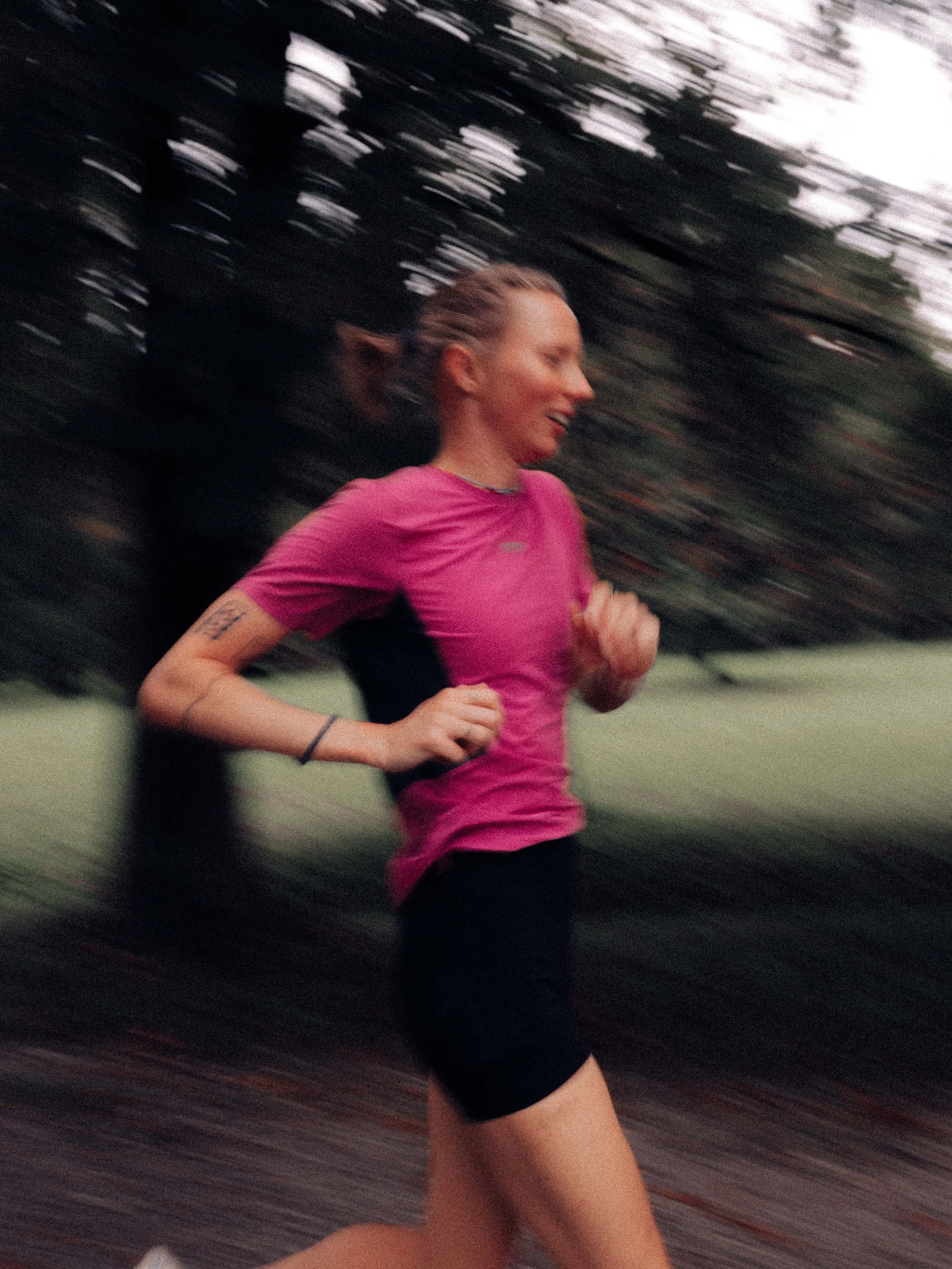
Photo by Alex Zauner
You signed with Brooks earlier this year. How did that opportunity come together?
Completely unexpectedly. In late 2023, I had basically stopped running. I was doing Barry’s, Orange Theory, lifting, wearing cute matching sets, doing treadmill intervals under strobe lights. I was living my “hot girl Denver moment.”
Then I got an email from Adam Chase, who is the unofficial uncle of the Brooks trail team. He wanted to get coffee. I thought he was going to help me find run clubs. Instead he pitched me on joining Brooks.
I was very honest. My running had been chaotic, I wasn’t going to win Worlds, but I could bring team energy, experience, and stability. They liked that, and they offered me a developmental and mentor style role. I said yes — then realized I actually had to start running again.
Once you joined the team, how did you figure out what you wanted 2024 and 2025 to look like?
I hired coach Matt Daniels in January, and my only request was that I wanted to have fun, keep expectations low, and avoid anxiety all year. Then, in a wild twist, I got laid off from my tech job at Slack with eight months of severance. It felt like the universe was saying, “If you’re going to commit to this, now is the time.”
Your Golden Trail season started in Asia. What drew you there?
Honestly, the only reason is that I had never been to Asia. I signed up for Kobe in Japan and the Great Wall race in China on a whim. Kobe was brutally hard: twelve miles, eight thousand feet of climbing, humidity, technical terrain. I wanted top thirty and finished tenth. Then I finished ninth in China.
Those races showed me I wasn’t just there to participate. I could compete.
Then came Sunapee. What did that race mean for you?
Sunapee was a major turning point. I mainly went because Brooks had a team house and I wanted to bond with my teammates. The course felt easier than Asia, and I had a few more weeks of fitness. I finished fourth. That was the moment my coach and I realized I could actually compete at the highest level this season.
You ended up skipping Broken Arrow. Why was that the right decision for you?
Mentally, it wasn’t the right environment for me. My goal this year was low stress and fun. Broken Arrow is a big race with a lot of pressure and noise. I wasn’t emotionally ready for that, so I stepped back. It was hard, but it protected the rest of my season.
How did making the U.S. team for Worlds unfold?
After Mexico, everything shifted. I got the call that I had made the Worlds team. Sharing the build up with Anna and Sydney was incredibly special. Brooks built a strong group, and by the time Worlds came around, we felt like family. Anna and I ran together in the classic mountain race, helping each other through the hardest parts. Those moments build friendships that last.
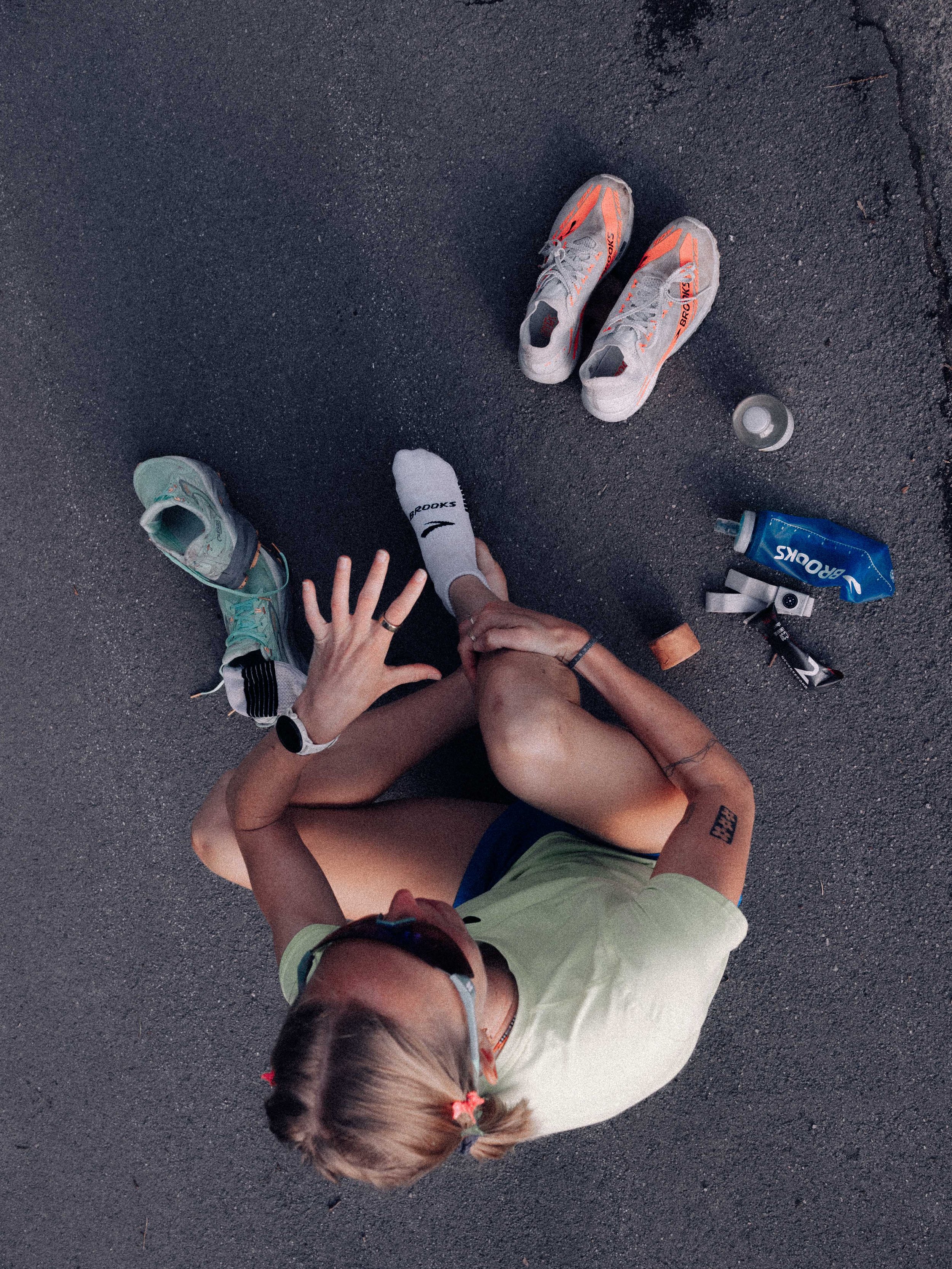
You finished tenth in the Golden Trail World Series. What did that experience teach you?
It was wild. I went into the final ranked twelfth, had a great prologue, and moved to eleventh. Then I got Covid and fell apart in the final. Five people passed me in the last two miles. But consistency matters. My off day was still a top twenty, and that locked in tenth overall.
It taught me that you don’t need perfection to be excellent. You just need consistency, resilience, and the ability to stay in your lane.
Looking back on this year, what lessons stand out the most?
That you can always rewrite your story. You are in control of your narrative. And that you can race without anxiety. I used to have intense performance fear. This year showed me that joy and competitiveness can live together.
Switching gears — tell me about Wild Strides. How did your coaching collective start?
Wild Strides began as Grayson Murphy’s stationery company. Then during a training trip last year, Grayson, Rachel, and I realized we wanted to build a coaching program for what we call all terrain athletes. We represent the U.S. in both track and trail, which is rare. We wanted to coach runners who want to do both — Boston and UTMB, a marathon and a 50K.
Our message is simple: you can be a unicorn. You do not have to choose one lane.
What are you excited about heading into the off season?
Hosting more. Deepening friendships here in Boulder. And I’m doing a “baby cross country season” on grass and road in December and January just for fun. I want to see how my body responds to speed again. I’m also putting together a women’s trail to XC team for U.S. Club Cross. It’s going to be chaotic, in the best way.
Anything you want to leave people with?
Most of my thoughts are already scattered through this, but mostly this: have fun, show up, take the pressure off, and rewrite your story whenever you need to.
Listen to this conversation here.